Degrees of Consequence: The Quiet Craft of Sheffield Heat Treatment
A kitchen knife is often judged at the chopping board: how it falls through an onion, how long it keeps a working edge, whether it feels brittle or forgiving in the hand. Those qualities are shaped at the bench, certainly, but they are settled earlier, in a furnace and a quench tank, by people whose names rarely appear on the blade. In Sheffield, the small heat-treatment shops that serve independent makers remain one of the least visible parts of the cutlery trade. They are also one of the most consequential.
A Stage Without a Shop Window
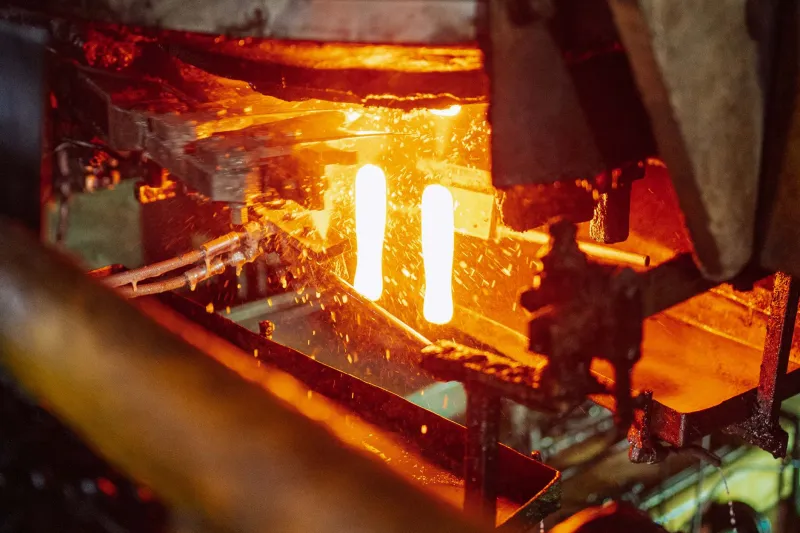
Heat treatment is not a single act. For a carbon or stainless steel blade, it typically involves austenitising, quenching and tempering, with careful control of temperature, atmosphere and time. The aim is a structure that is hard enough to hold an edge, tough enough not to chip at the first careless moment, and stable enough to survive years of washing and wiping. In practice, the variables are numerous, and the margin for error is small. A batch that runs a little too hot, or is held a little too long, may still look like a knife. It may not behave like one.
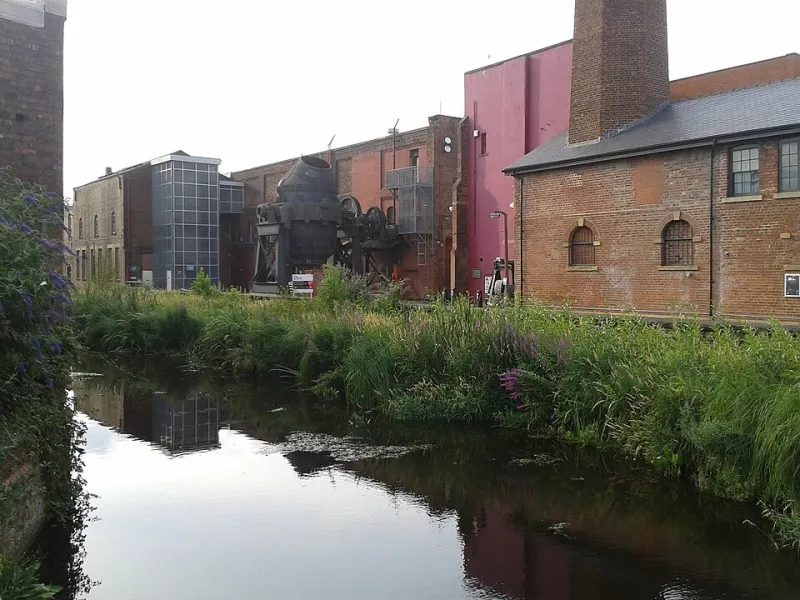
The shops that handle this work for Sheffield's smaller makers are not visitor attractions. They sit on industrial estates, behind roller shutters and security gates, often in the eastern parts of the city where the old cutlery and engineering trades clustered. There is no shop window, no polished display of finished goods. There are furnaces, controllers, quench tanks, hardness testers and racks of blades waiting their turn. The atmosphere is practical rather than theatrical.
What the Furnace Decides
For buyers, the consequences are tangible. A blade that has been properly hardened and tempered will resist rolling at the edge when it meets a hard board or a tough crust. It will sharpen predictably and hold that sharpness through a reasonable period of kitchen work. A blade that has been under-treated may feel soft and dull quickly; one that has been over-hardened may feel sharp but fragile, vulnerable to micro-chipping along the edge.
The difficulty is that these differences do not announce themselves at the point of sale. A knife can be attractive, well balanced and neatly finished while still carrying a heat treatment that limits its usefulness. This is why the small-batch heat treater's judgement matters. The work is not merely a service to makers; it is part of the product's integrity. In a city that has built so much of its reputation on steel, the furnace is one of the places where that reputation is either upheld or quietly eroded.
The Knowledge That Doesn't Fit on a Certificate
Modern furnaces are controlled by digital instruments, and hardness can be measured with a tester. Data logs and certificates have their place. Yet the people who run small heat-treatment shops describe their work in terms that go beyond the readout. They speak of the colour of a blade as it comes out of the furnace, the sound of the quench, the feel of a file across a hardened edge, the way a particular steel from a particular supplier behaves in a particular week.
That knowledge is accumulated slowly. It is passed on by observation and correction rather than by manual alone. In a small shop, the person setting the programme may also be the person unloading the furnace and testing the first blade. The feedback loop is short, which is an advantage, but it also means that the craft depends heavily on individuals. When a shop loses its experienced hand, it loses more than a pair of gloves.
Why Small Batch Still Matters
Large industrial heat treaters operate on scale, with continuous lines and standardised cycles. They have their place, but they are not always suited to the independent maker producing a dozen blades in a week, or to the workshop experimenting with a new steel. Small-batch heat treatment offers flexibility: shorter runs, closer communication, and a willingness to adjust a cycle for a particular design. For a maker working with thin stock or a demanding geometry, that relationship can be the difference between a reliable product and a batch of expensive guesses.
There is also a commercial argument. Sheffield's cutlery identity rests partly on the concentration of skills within a short distance. A maker can grind a blade, have it treated, and test it without sending it across the country. That proximity supports iteration. It allows a small workshop to refine a design in weeks rather than months. In 2026, when independent makers are competing with imported knives at every price point, that kind of agility is not a luxury.
The Economics of a Few Minutes
Yet the economics are difficult. Heat-treatment furnaces consume energy, and small runs are less efficient than large ones. Compliance, maintenance and insurance add to the overhead. The work is skilled but not always highly paid, and it is easy for customers to underestimate how much judgement goes into a process that may take only a few minutes of active attention. The result is a familiar problem in the cutlery trade: a vital stage that is priced as a service rather than valued as a craft.
Some shops have responded by diversifying into related work, treating tools and components beyond kitchen knives. Others have built closer relationships with a small group of makers, essentially becoming embedded in their production. Both approaches are pragmatic. Neither guarantees succession. The question for Sheffield is whether the remaining small heat-treatment capacity can be maintained as a shared resource, or whether it will decline quietly as equipment ages and experienced operators retire.
What Buyers Can Reasonably Ask
For the kitchen buyer, heat treatment is unlikely to become a dinner-table topic. But it is reasonable to ask a maker how blades are treated, whether the process is done in Sheffield, and whether hardness and toughness have been considered for the intended use. A chef's knife and a filleting knife do not want the same compromise, and a maker who can explain that compromise is usually a maker who understands the product.
It is also reasonable to treat heat treatment as part of the story of a Sheffield knife, not as an invisible preliminary. The city's cutlery heritage is often told through marks, workshops and famous names. The furnace deserves a place in that account. It is where steel is given its working character, and where the difference between a handsome object and a dependable tool is often decided.
Keeping the Craft in the City
In 2026, the small heat-treatment shop is not obsolete. It is simply overlooked. It sits between the steel supplier and the finishing bench, performing a stage that buyers experience with every cut but rarely see. If Sheffield wants to keep a living cutlery trade rather than a heritage display, it will need to value that stage accordingly: with fair pricing, with succession, and with a willingness to treat tacit knowledge as infrastructure. A city that once built its name on steel should know that the last few degrees are often the ones that matter most.