Beyond the Chef's Knife: Reclaiming Sheffield's Place at the Table
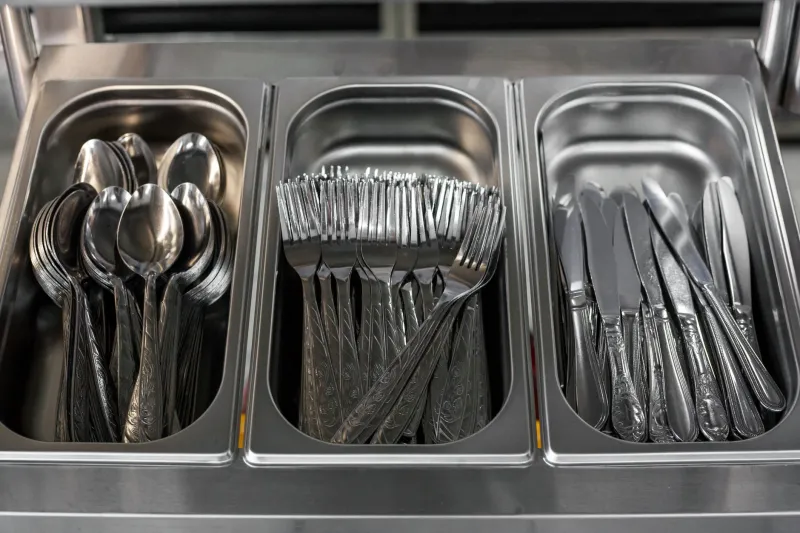
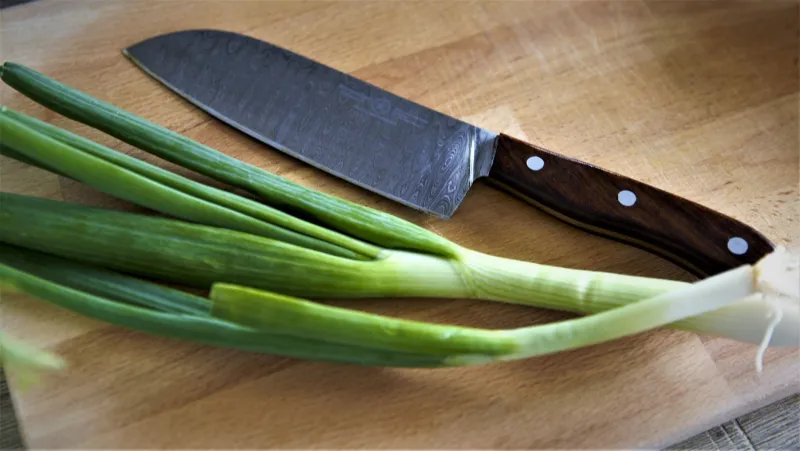
The kitchen knife gets the attention. It is the object of the photograph, the subject of the buyer's guide and the centre of the modern Sheffield cutlery revival. Yet the drawer has another half. Forks, spoons, fish knives, serving slices and the quiet architecture of the table setting were once as central to the city's trade as any blade. If Sheffield is serious about keeping its cutlery name alive, tableware should not remain the forgotten side of the business.
A Trade Built on the Table
Sheffield's reputation was not made by the chef's knife alone. In the eighteenth and nineteenth centuries the town's workshops supplied the country with flatware in silver, silver plate, Britannia metal and, later, stainless steel. Firms such as Walker & Hall, Mappin & Webb and Joseph Rodgers built international names on the table as much as on the pocket knife. The design language was distinctive: restrained patterns, balanced handles, and a sense of weight that was meant to be felt rather than displayed.
The city's role in the development of stainless steel is well documented. Harry Brearley's work in Sheffield in 1913 gave the world a material that would eventually transform domestic cutlery. What is less often told is how quickly that material moved from the laboratory to the dining room. Stainless flatware became a practical British product, made in the city and sold across the Empire. The table was a mass market, and Sheffield served it.
The Long Retreat
The second half of the twentieth century brought the familiar story of consolidation, import competition and closure. Flatware production moved abroad, patterns were discontinued, and the great names were absorbed into larger groups. The skills that remained were concentrated in fewer hands: die-sinkers, polishers, fettlers and spoon-and-fork makers whose knowledge was passed on through apprenticeships rather than written manuals.
A small number of workshops in and around Sheffield still produce or restore flatware, and a few specialist firms elsewhere in the UK keep the tradition alive. But the tableware side of the trade is now a minority interest. In 2026, the city's cutlery revival is more likely to be discussed in terms of chef's knives, damascus cladding and handle materials than in terms of a well-balanced dessert spoon.
What the Kitchen Knife Revival Missed
The modern Sheffield kitchen knife has been a genuine success story. Small makers have built reputations on geometry, steel choice and hand-finishing, and buyers have responded. But the focus on the knife has narrowed the conversation. It has also narrowed the commercial base. A workshop that makes only high-end chef's knives is exposed to a small number of customers and a single product category.
Tableware offers something different. It is a volume business, but it is also a gift business, a hospitality business and a repair business. A four-piece setting is not a single purchase; it is an heirloom that can be added to, re-polished and passed on. For a city trying to rebuild a cutlery trade, that is a useful kind of product: one that creates repeat customers and a reason to keep the polishing wheel turning.
The Skills Question
The barrier is not demand. It is capability. Flatware requires different skills from knife making. It needs dies, presses, polishing compounds and the patience to match a pattern that may be decades old. It also needs people who can look at a fork and understand why one tine sits a fraction of a millimetre differently from another.
Some of that knowledge survives in Sheffield, but it is not being renewed at scale. A serious tableware revival would need training, tooling and a route to market. It would also need makers willing to see flatware not as a heritage curiosity but as a contemporary product. The same digital channels that have helped kitchen knife makers reach customers can work for a serving spoon.
A Practical Case for Buyers
For UK buyers, Sheffield flatware makes a straightforward case. It is repairable, it can be re-polished, and it can be matched to existing patterns if the maker keeps the dies. It carries a lower environmental cost than disposable or short-life imports. It also supports a local supply chain of polishers, die-sinkers and finishers whose skills are difficult to replace once lost.
The buyer's caution is the same as with knives: read the claim carefully. Sheffield steel is not the same as Sheffield-made. A pattern may be designed in the city but produced elsewhere. Those distinctions matter, and they are worth asking about.
Setting the Table Again
Sheffield does not need to choose between the chef's knife and the table fork. The city's cutlery identity was built on both. A revival that ignores flatware leaves half the drawer empty and half the trade unserved. The practical case is there: a gift market, a hospitality market, a repair market and a heritage that buyers still recognise.
The question is whether the city's makers and their customers are willing to look beyond the blade. A well-made fork is not a lesser object than a well-made knife. It is simply a different one, and it belongs on the same bench.