Who Will Hold the Wheel? Sheffield's Cutlery Succession Problem
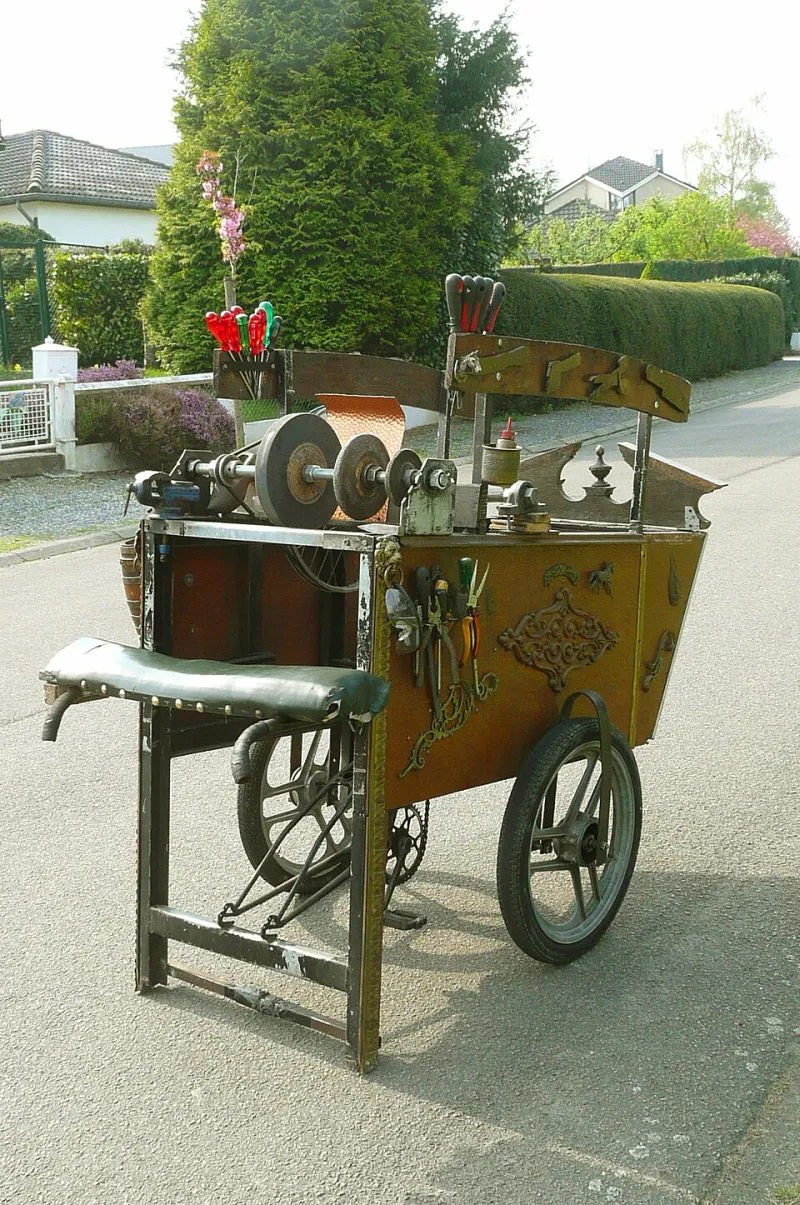
Photo: Jacquesverlaeken, CC BY-SA 4.0, via Wikimedia Commons
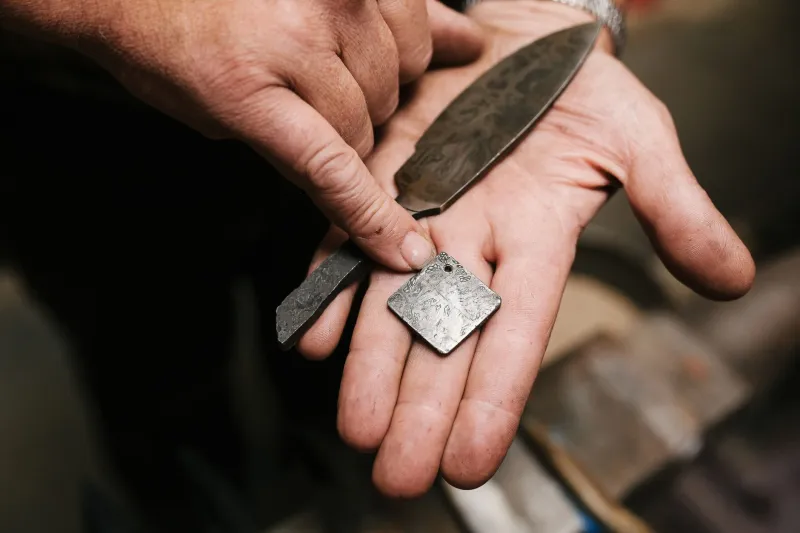
On a damp Wednesday morning in a first-floor workshop off one of the city's older industrial yards, a grinding wheel is brought up to speed and a blade is laid against it. The sparks are brief and controlled. The man making them has been at the trade for forty-one years and intends, he says, to stop at sixty-six. Nobody has yet been found to take the wheel.
That sentence — nobody has yet been found — is repeated, in various forms, in workshops across Sheffield. It is the central practical question facing the cutlery trade in 2026, and it is not a question about sentiment. It is a question about throughput, about premises, about who pays for the abrasives and the wasted steel while a beginner learns to feel an edge.
A trade measured in hands
Sheffield's cutlery reputation was never built on a single factory floor. It was built on small workshops and the people who ran them: the little mesters, grinding, glazing, hafting and buffing in rooms they rented by the week. The system was fragmented, occasionally exploitative, and remarkably efficient at transmitting tacit knowledge, because a beginner worked shoulder to shoulder with someone who could hear a wheel out of true and correct a wrist angle without saying much at all.
That knowledge does not sit in manuals. A grinding wheel of a given grit behaves differently on a forged carbon blade than on a strip of stainless; a buffer will snatch a thin edge if it is presented at the wrong moment; a haft is either tight for a generation or loose within a year, depending on how the scales were fitted. These are judgements made in the hands, and they take years to acquire. When a workshop of two or three people loses one of them, it does not lose an employee. It loses a library.
The arithmetic of retirement
The age profile of the trade is not a secret to anyone inside it. Cutlers, grinders and polishers who learned in the 1970s and 1980s are now at or past conventional retirement age, and many are staying on because there is no one to hand over to. The firms are small — often one to five people — which means there is rarely a spare bench, a spare wage or a spare pair of hands to supervise a learner properly.
Taking on an apprentice is, for such a business, an act of considerable financial nerve. The wage is the smallest part of it. Someone must give up productive hours to teach; steel will be ruined; insurance and extraction and health surveillance all cost money; and the return arrives, if it arrives, in the third or fourth year. In a workshop where the owner is also the salesperson, the bookkeeper and the person who answers the phone, that is a hard case to make.
Set against that the alternatives available to an eighteen-year-old in South Yorkshire. Warehousing and logistics pay a predictable wage with no capital risk. Engineering and software offer progression. Cutlery offers a craft, a degree of autonomy and, in most small firms, a modest income for the first several years. The trade is not competing on money. It has to compete on meaning, and meaning does not pay a mortgage on its own.
Where training actually happens
The training landscape is better than the trade sometimes admits. The city's college sector runs engineering, fabrication and manufacturing courses that provide a foundation in materials and tolerance. The Cutlers' Company has long supported apprenticeship and Freeman routes into the trade, and its charitable work has helped individual entrants. Heritage bodies and the surviving workshops around Portland Works and Kelham Island have done valuable work in showing the public what the trade involves, which in turn produces a steady trickle of enquiries from people who want to learn.
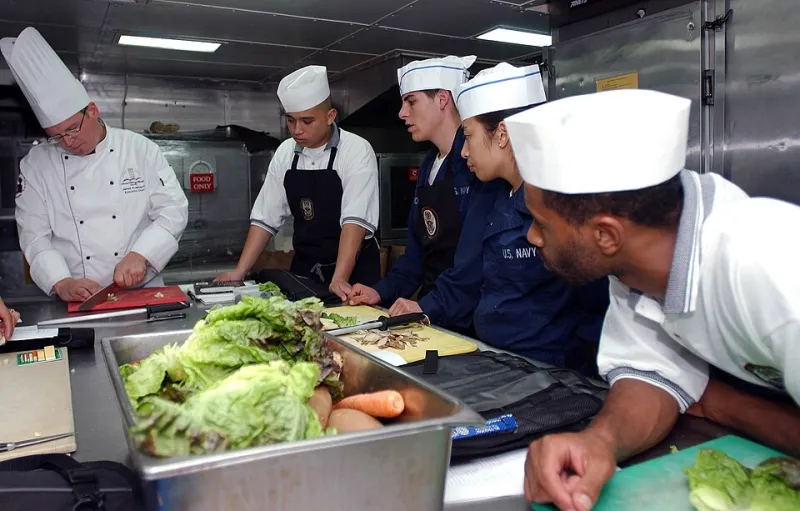
What is missing is the bridge between a college module and a production bench. A learner can be taught to read a drawing, to work safely, to understand hardness and temper. It is far harder to find a course that will put someone at a grinding wheel for six hours a day, five days a week, for two years, under a mentor with an interest in their progress. That is not a curriculum problem. It is a capacity problem, and capacity in this trade is measured in benches, wheels and hours.
There is also a question of expectation. Hobby knife-making has grown considerably, and many newcomers arrive with an interest in forging and finishing rather than in the repetitive accuracy that production grinding demands. Both are legitimate; only one of them keeps a cutlery works solvent.
Barriers that are practical, not romantic
Any serious attempt to close the skills gap has to start with the unglamorous items.
- Premises. Small industrial units in Sheffield have been steadily converted or repriced. A training bench needs space, power, extraction and insurance, and it needs to be somewhere a young person can reach by bus.
- Consumables. Abrasives, belts, buffing compounds and steel are the recurring cost of learning. A shared purchasing arrangement across several firms would make a modest but real difference.
- Health surveillance. Grinders' dust, vibration and noise are genuine hazards, properly regulated. New entrants and their parents will ask about them, and the trade should be able to answer with evidence of good practice rather than a shrug.
- Supervision time. Mentoring must be paid for. A workshop cannot fund it out of goodwill indefinitely, and a scheme that assumes otherwise is a scheme that quietly fails.
What would change the numbers
Three interventions seem more plausible than a grand national strategy. The first is a shared training workshop: a single equipped facility, funded jointly by firms, the Company and the heritage sector, where several learners can be taught at once by a rota of working cutlers. The second is modular and part-time apprenticeship, acknowledging that a twenty-two-year-old with a mortgage cannot always commit to a four-year block. The third is a deliberate link between heritage income and training: visitor interest in Sheffield's edge tools is real, and a proportion of that revenue could reasonably be directed at the benches where the skills are actually transmitted.
None of this is a rescue plan. It is maintenance — the same kind of steady, unspectacular work that keeps an edge true.
The mark and the hand
A maker's mark is a promise, but it is also a claim about continuity. When a Sheffield name is stamped on a blade, the buyer is entitled to assume that someone in the city knew how to make it, and that someone else is learning. In 2026 that second assumption is the fragile one.
The trade does not need to be mourned. It needs benches, money and time, and people willing to be bored for three years in order to become good. Whether Sheffield can supply those things is the only question that matters.