The Maintenance Market: A Buyer's Guide to Sharpening Services in Sheffield
Photo: U.S. Navy photo by Mass Communication Specialist 2nd Class Jon Rasmussen, Public domain, via Wikimedia Commons
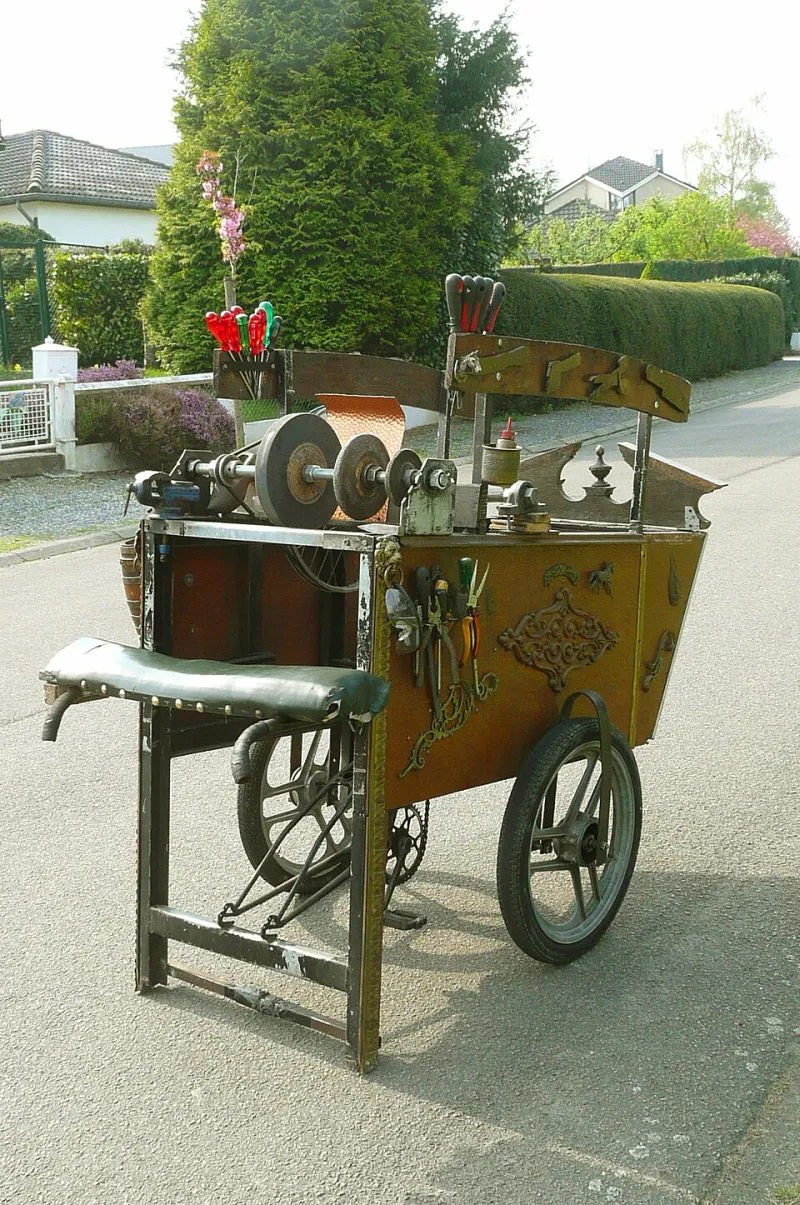
For most of the twentieth century, sharpening was something that happened in the background of Sheffield life: a man with a wheel, a round of butcher's shops, a stall at the market. It thinned out as knives became cheap enough to replace, then began to return — first among professional kitchens, then among home cooks who had spent real money on a blade and did not intend to throw it away.
In 2026 the sharpening trade in the city is small but visibly growing, and it has split into recognisably different business models. This guide sets out what each one offers, what a good sharpening actually involves, and how to judge whether the person holding your knife knows what they are doing.
Why the money is moving to maintenance
The economics are straightforward. A decent Western-style chef's knife now costs somewhere between £60 and £200; a Japanese blade can cost considerably more. Against that, a supermarket knife at £12 is not really a comparison — it is a different product, made of softer steel with an edge that will fold within weeks. Once a buyer has crossed the line into a knife worth keeping, maintenance becomes cheaper than replacement by a wide margin.
Three other factors are doing work here. Professional kitchens have become more cost-conscious about equipment and more willing to outsource a chore that consumes staff time. Domestic buyers have absorbed a decade of messaging about buying well and keeping things longer, much of it driven by environmental concern about disposable goods. And the simple fact of scarcity: fewer people now grow up watching someone use a steel, so the skill has become a service rather than a household habit.
Four models of sharpening business
Mobile rounds. A grinder working from a van, visiting restaurants, butchers, delis and occasionally private houses on a fixed weekly or fortnightly schedule. Convenient, quick, and usually priced per knife with a minimum call-out. Best for trade customers and for households with several knives.
High-street drop-off. Cookshops, hardware shops and some butchers take knives in over the counter and return them a few days later, sharpened by a local workshop. The advantage is trust and footfall; the disadvantage is that the shop is an intermediary, so ask who actually does the work and with what equipment.
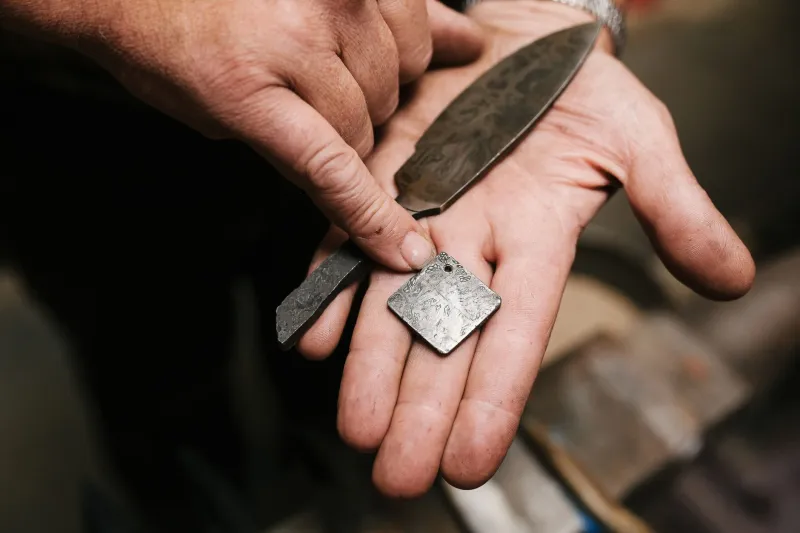
Workshop and mail-in service. The knife travels to a fixed bench, often in a small industrial unit, and comes back by post or collection. This is the model that usually offers the most control — water stones, controlled angles, proper inspection — and typically the longest turnaround. It suits Japanese knives, thin geometries and anything with sentimental or financial value.
Restaurant contracts. A workshop takes responsibility for a kitchen's entire knife roll on a rolling schedule, usually fortnightly or monthly, with replacements or repairs handled alongside. This is the fastest-growing segment and increasingly the commercial backbone of the trade.
Prices vary, but as an indicative guide a straightforward chef's knife sharpened by a mobile or drop-off service commonly falls in the £5–£9 range, with workshop and mail-in services charging more for water-stone work or for knives requiring repair. Serrated edges, chips, broken tips and handle work attract a supplement. Anyone quoting substantially less than the local norm is either removing a great deal of steel very quickly or not doing the full job.
What a proper sharpening involves
A honing rod realigns an edge; it does not restore one. Sharpening removes steel to create a new apex, and the quality of the result depends almost entirely on how that removal is managed.
A competent service will assess the existing bevel, choose an angle appropriate to the knife's purpose and steel, progress through a sensible sequence of abrasives, remove the burr cleanly, and finish at a grit matched to the job. A kitchen knife does not need a mirror polish; it needs a toothy, stable edge that will survive contact with a board. A technically accomplished sharpener will also thin behind the edge when a knife has been sharpened repeatedly, because otherwise the blade gradually becomes a wedge and no amount of apex work will make it cut well.
Heat is the quiet enemy. Belt grinders are fast and entirely legitimate in experienced hands, but a thin blade held against a coarse belt for too long will lose its temper at the edge and will never hold a sharpening again. Water-cooled systems and hand work on stones are slower for a reason.
Questions worth asking before handing over a knife
- What method and abrasives do you use, and at what angle will my knife be sharpened?
- Do you thin behind the edge, or only sharpen the existing bevel?
- How do you handle chips, bent tips and serrated edges?
- What is your policy on single-bevel and Japanese knives?
- Are you insured, and what happens if a knife is damaged?
- What turnaround should I expect, and how are knives stored in the meantime?
- Do you check and treat handles, particularly on carbon steel knives?
- Can you tell me what steel this knife is likely made from, and what that means for its care?
A sharpener who can answer these without hesitation is almost certainly worth the money. One who cannot is a risk to an expensive object.
Red flags and reasonable expectations
Be cautious of sharpening offered at implausibly low prices, of services that will not discuss method, and of anyone who promises a knife will never need sharpening again. A well-made knife, properly maintained, can be sharpened dozens of times over its life, but each full sharpening removes a small amount of steel — typically a fraction of a millimetre — and the geometry changes gradually. Over-grinding is the most common way good knives are ruined, and it is usually invisible until the blade is already too thick to perform.
Equally, do not expect a professional service to compensate for a knife that is simply poor. Soft stainless steel will lose its edge quickly whatever is done to it. Sharpening preserves quality; it does not create it.
The Sheffield advantage
Buyers in this city are, on the whole, well served. The sharpening businesses that have grown here tend to be run by people with a working knowledge of steel — its hardness, its grain, its behaviour at the edge — which is not a universal quality in the trade nationally. Mobile rounds cover most of the S postcodes, drop-off points exist in and around the shopping districts of Sharrow Vale, Ecclesall Road and Kelham Island, and workshop services will accept posted knives from anywhere in the UK.
For a home cook, one professional sharpening every six to twelve months, with weekly honing in between, is usually sufficient. For a professional kitchen, fortnightly is closer to the mark. Either way, the calculation has changed: the question is no longer whether a knife is worth sharpening, but where to take it.