The Humble Offcut: A Modest Proposal for Sheffield's Knife Workshops
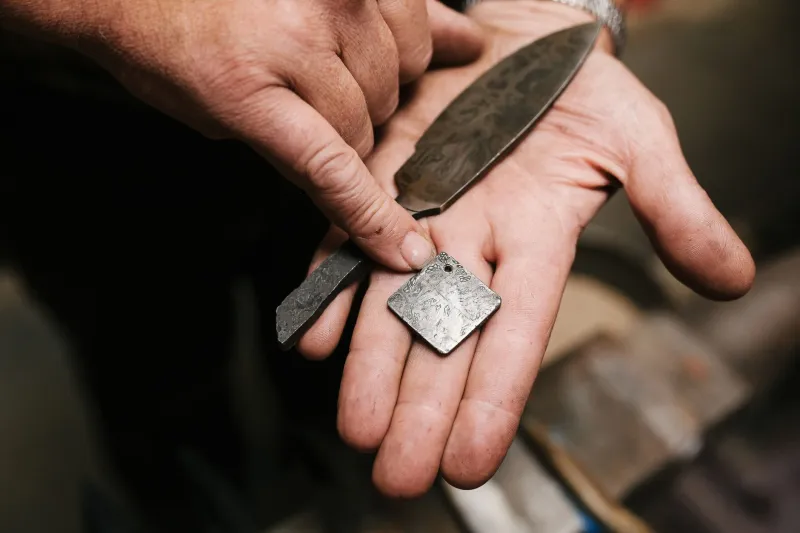
In most Sheffield knife workshops there is a box, a tub or a corner where the offcuts go. Some are slivers from profile cutting; some are blanks that did not quite make the grade; some are seconds with a cosmetic flaw that would never affect the edge. Traditionally, they are treated as scrap. The argument here is simple: they are not scrap. They are an underused product line, and the Sheffield name is strong enough to carry it honestly.
The Problem with the Waste Bin
Steel is not free, and neither is the labour that has already gone into cutting, grinding and sometimes heat-treating a piece. When an offcut leaves the workshop as scrap, most of that value leaves with it. Recycling is better than landfill, but it is not the same as making something useful. The trade already knows this; what is often missing is a deliberate system for turning the residue of flagship production into a coherent, affordable offer.
A Product Line Hiding in Plain Sight
The obvious candidates are small and practical: practice paring knives, garden blades, sharpening steels, starter tools for cookery students, and simple utility knives for the shed or allotment. None of these needs to compete with a flagship chef's knife. Each can carry the same steel, the same workshop stamp and the same story in a smaller, cheaper form. For a customer who is not yet ready to spend flagship money, that is a genuine entry point.
The Business Case in Brief
First, material costs are already sunk. The steel has been bought; the cutting has been done. Second, labour can be scheduled around larger orders rather than disrupting them. Third, an entry-level customer is not a distraction from the flagship business; they are a future customer, and possibly a loyal one. Fourth, waste reduction is not only an ethical point but a commercial one: fewer skips, lower disposal costs, better use of a finite material. Fifth, and perhaps most importantly, every offcut product carries provenance. It says, without exaggeration, that this steel came from the same workshop and the same tradition as the chef's knives.
Grading Before Branding
The mistake would be to blur grades and sell everything as though it were first quality. A credible offcut line needs clear categories. Grade A might be small knives with no cosmetic defects. Grade B might be cosmetic seconds with a full functional guarantee. Grade C might be practice blanks or rough-finished pieces for learners. The grading should be written down, applied consistently and explained to the customer. Honesty is the brand asset here; without it, the line becomes a way of offloading problems.
Pricing with Integrity
The prices should be accessible without devaluing the flagship range. A practice parer or starter knife might sit in the low tens of pounds; a workshop sharpening steel or garden blade in a similar bracket; a practice blank lower still. These are not loss leaders in the ordinary sense, because the material is already paid for. They are a way of converting residual value into turnover and goodwill. The key is to price for the customer's pocket while respecting the labour that finishing still requires.
The Provenance Story
Every offcut piece can carry a simple card or stamp: the steel type, the workshop, the batch where known, and a plain statement that it was made from material from the same production as the maker's larger knives. That is not marketing fluff; it is traceability. Sheffield's reputation was built on tools for ordinary work, not only on display pieces. An honest offcut line returns to that idea.
A Friendly Provocation to the Trade
Some makers will worry about cannibalisation. Will a cheap parer stop a customer buying a chef's knife? Possibly, for a time. But the greater risk is that the customer buys nothing at all, or buys an imported knife with no story. An entry-level Sheffield piece can begin a relationship that a brochure cannot. The flagship chef's knife remains the flagship. The offcut line simply widens the doorway.
Sheffield's name has survived because the trade adapted. Selling offcuts deliberately is not a retreat from craft; it is an extension of it. The famous name can be kept alive not only by flagship blades but by honest, affordable steel that carries the same story — and by workshops confident enough to grade, brand and price it with pride.