A Second Life Well Earned: The Case for Rehandling Sheffield Kitchen Knives
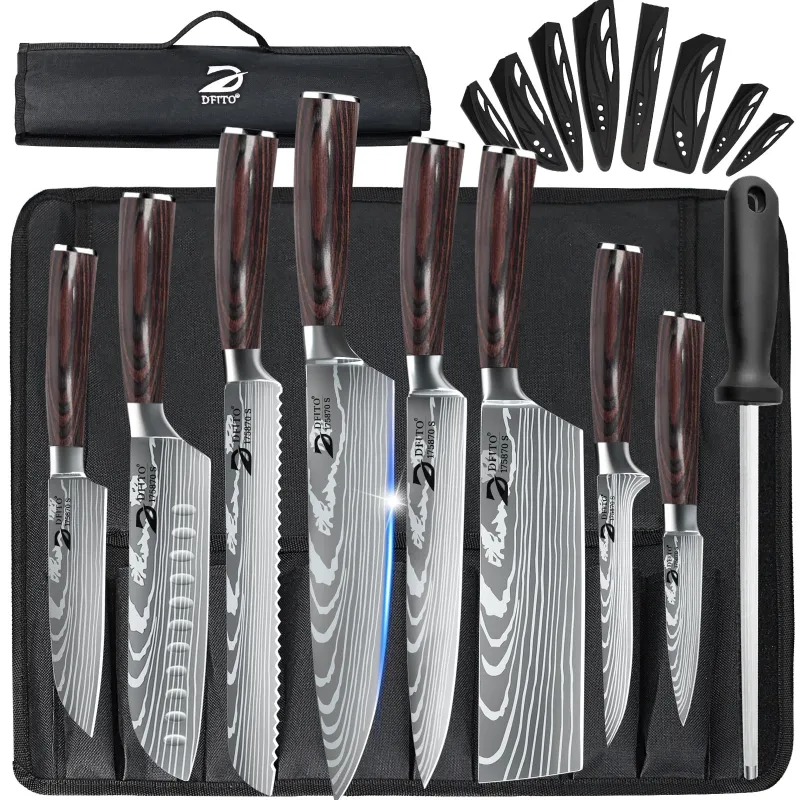
Photo: knife repair workshop rehandling kitchen knife rivets wooden handle, via i5.walmartimages.com
A kitchen knife is not a subscription service. It is a piece of worked steel with a handle attached, and in Sheffield that distinction has always mattered. A knife that can be sharpened is useful; a knife that can be repaired, rehandled and returned to the block is a different proposition altogether. In 2026, as buyers weigh £150 against £250 against £400, the question is not simply how a knife cuts on the first day. It is whether the maker has planned for the tenth year.
The failures that justify a repair bench
Most kitchen knives do not fail at the edge. They fail at the join between steel and handle. A loose rivet is the obvious symptom, but the causes are usually quieter: repeated washing, differential expansion between tang and scale, and moisture sitting unnoticed beneath a bolster. On a full-tang knife, water can track under the scales and begin working on the tang. On a partial-tang knife, the same water finds an easier route into the handle material itself.
The warning signs are worth learning. A rivet that turns slightly under thumb pressure is not a cosmetic issue. A dark line appearing at the bolster is rust beginning in a place that is difficult to dry. Scales that have lifted at the palm swell, or a handle that clicks when the blade is flexed, suggest that the adhesive bond has begun to give. None of these failures necessarily condemns the blade. They do, however, mark the point at which a knife needs a bench rather than another stroke on a steel.
What a proper rehandle involves
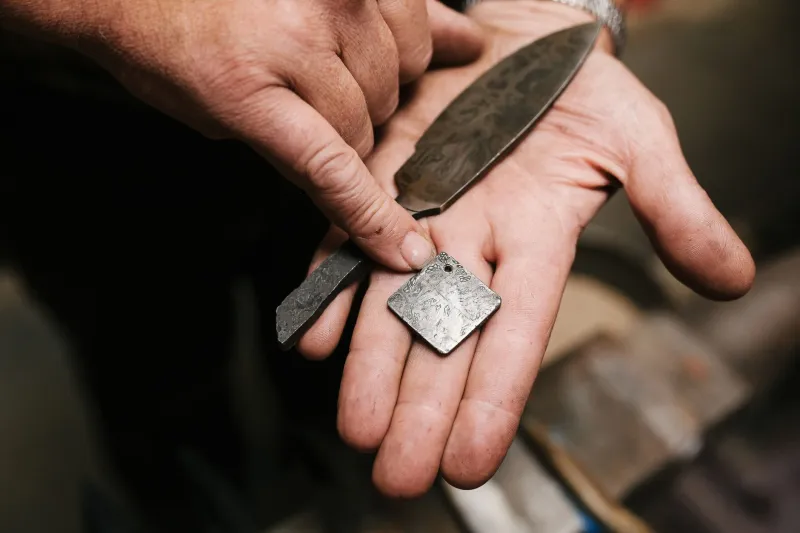
A proper rehandle is not a cosmetic upgrade. It begins with disassembly: drilling out rivets, removing the old scales and cleaning the tang back to bare metal. Any rust is neutralised and light pitting stabilised. The tang is checked for cracks or bending. New scales are fitted, usually in stabilised wood, synthetic composite or horn, and fixed with rivets, Corby bolts or a combination of mechanical fixing and adhesive. The handle is then shaped, sanded and finished, and the blade is sharpened and cleaned.
The details matter. A maker who preserves the original blade markings, keeps the handle proportions faithful to the original design and leaves no epoxy ridges at the bolster is doing restoration rather than merely replacement. In 2026, a straightforward rehandle in a standard synthetic or modest hardwood is likely to cost between £60 and £110 at a Sheffield workshop. A more involved job, with premium stabilised timber, Corby bolts, bolster clean-up and a full refinish, commonly falls between £120 and £220. Turnaround is typically two to six weeks, depending on materials and queue.
Set that against the cost of a comparable new knife and the arithmetic is rarely embarrassing. If the blade is sound, a £150 rehandle on a £250 knife buys another decade of useful service. If the blade is heavily worn, bent or suffering from deep pitting at the edge, repair may not be sensible. The judgment is technical, not sentimental.
Choosing a maker who believes in third lives
Buyers should ask a simple question before purchase: can this knife be rehandled? The answer reveals a great deal about how the maker regards the product. A knife with riveted scales and an accessible tang is a serviceable object. A knife with a moulded handle bonded permanently to a narrow tang is, in practical terms, a disposable one.
A maker who supports repair will usually say so plainly. They may offer a rehandling service, supply replacement scales or name a workshop they trust. They will be able to explain how the handle is fixed and whether the rivets are structural or decorative. They will not treat a request to replace a split scale as an accusation. For a Sheffield knife, this is part of the heritage claim: the city's reputation was built on cutlery that could be maintained, not merely sold.
It is also worth asking how the knife should be washed and stored. A maker who advises against dishwasher use is not being precious; they are trying to keep water out of the handle. A maker who supplies a simple care note and a named contact for repairs is signalling that the relationship continues after the sale.
The disposal trap
The opposite model is easy to recognise. It is the knife with a sealed handle, no visible rivets and a tang that cannot be reached without destroying the grip. It may cut well for a year or two. When the handle cracks, the economics collapse. The repair shop advantage belongs to the knife that can be taken apart, assessed and rebuilt.
This is not nostalgia. It is a commercial argument about value, waste and loyalty. A buyer who knows a knife can be rehandled is more likely to invest in a better blade in the first place. A maker who offers repair is more likely to retain that buyer for the second and third knife. Sheffield's cutlery trade has always depended on reputation, and reputation is built as much at the repair bench as at the grinder.
A sensible repair rhythm
Inspect the handle once a year. Check the rivets, run a thumb along the bolster join and look for lifting scales. Dry the knife immediately after washing and avoid leaving it in a sink or dishwasher basket. If a rivet loosens, have it attended to before water gets behind the scale. If the handle is purely cosmetic, a refinish may be enough; if it moves, it needs proper repair.
A Sheffield knife should not be kept alive at any cost. But a good blade with a failed handle is not a finished object. It is a candidate for a second life, and often a third. The makers who understand that are the ones worth buying from in 2026.