Stamped, Forged or Merely Finished? How to Read a Sheffield Claim on a Kitchen Knife
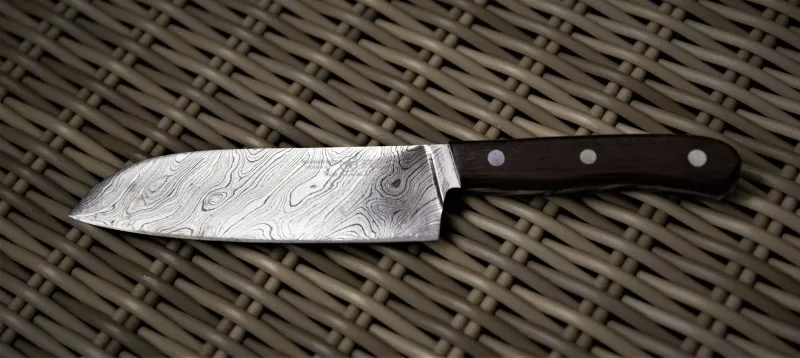
Walk into a kitchenware shop in any British city this autumn, or scroll the knife section of a large online retailer, and you will meet the word Sheffield repeatedly. It appears stamped into blade faces, set in product titles, printed on card sleeves and buried halfway down a specification table. Sometimes the word is entirely earned: a blade ground, hardened and finished on a bench within a few miles of the Don. Sometimes it describes a billet of steel that was rolled in the city, shipped abroad, turned into a knife and sent back to Britain in a box. Both statements can be literally accurate. Neither tells the shopper what they assume it tells them.
The confusion is not the fault of the buyer. It is the fault of a trade vocabulary that has been allowed to blur, and of a labelling culture in which the most valuable word on the packaging is also the least defined. What follows is an attempt to sort the claims into categories a shopper can actually use.
Three phrases that look alike and are not
The first is Sheffield steel. This is a materials claim and nothing more. It says where the steel was melted or rolled. It says nothing about who ground the blade, where the knife was assembled, or how it was heat-treated. A knife made entirely in another country from Sheffield-rolled stock may legitimately carry the phrase, and it may be a perfectly good knife, but it is not a Sheffield knife.
The second is Made in Sheffield. This is an origin claim, and in UK non-preferential practice the test is substantial transformation: the last substantial process of manufacture must take place here. Grinding a blade from a blank, hardening it in a workshop, fitting a handle and finishing the bevels plainly qualifies. Polishing a completed knife that arrived in a shipping crate and sealing it in a sleeve does not — whatever the address on the invoice.
The third family of phrases sits in the grey middle: finished in Sheffield, assembled in Sheffield, Sheffield-designed. Each may be honest. Each may also be doing very little work. A handle fitted to an imported blade is assembly; a drawing posted to a factory overseas is design. Neither is a fraud, but neither is what a shopper pictures when they read the city's name in a headline font.
What the Cutlers' mark can and cannot certify
Buyers often assume that the presence of a Sheffield mark settles the matter. It helps, but it is worth understanding what sits behind it.
The 'Made in Sheffield' trade mark is held by the Company of Cutlers in Hallamshire and licensed to users. The Company is a guild with centuries of standing and a genuine interest in protecting the city's name, but it is not a statutory regulator, and its authority over the mark is contractual rather than universal. A knife without the mark is not necessarily foreign; a knife with it has at least passed through a licensing arrangement.
A second source of confusion is the Sheffield Assay Office. Its hallmarks are a guarantee of precious metal content and nothing else. A silver ferrule or a hallmarked bolster tells you about the metal in that component; it says nothing whatsoever about the blade, the heat treatment or the geography of manufacture.
Six checks a shopper can make in ten minutes
Ask for the steel grade and its origin. A serious workshop will name it — a simple carbon steel, a Swedish or German stainless, a specific powder-metallurgy grade — and can usually say where it was rolled. Evasiveness here is informative.
Ask who ground the blade. Grinding is the labour-intensive heart of knife making. A maker who grinds in-house will say so, often with enthusiasm, and can usually tell you which bench it came off.
Check the address against reality. A registered office is not a workshop. Companies House will tell you what a business has declared; a map will tell you whether the declared unit plausibly houses a grinding room.
Send one question. Which part of this knife is made in Sheffield? An honest maker answers in a sentence. A vague reply, or none, is an answer of its own.
Read the pattern of the claim. If Sheffield appears in the product title but vanishes from the specification and the warranty, that absence is deliberate.
Apply price sanity. Hand grinding, hardening and finishing take hours of skilled labour. A price that undercuts an industrial import while claiming bench work in the city deserves a second look, not necessarily a rejection.
Why fuzziness costs the honest bench
Sheffield's remaining knife workshops are small. They carry the full weight of British labour costs, insurance, extraction and business rates, and they compete for attention against packaging that borrows their reputation for free. When a claim resolves, on inspection, to a handle screwed onto an imported blade, the buyer does not blame the importer alone. They become sceptical of the entire category — including the bench that genuinely hardened and ground the knife in their hand. That is the real cost of loose labelling: it devalues the mark for everyone who has actually earned it.
A vocabulary worth adopting
Consumer protection law already prohibits misleading commercial practices, and the remedies exist. But litigation is a blunt instrument and a slow one. A narrower, voluntary vocabulary would do more, faster. Four phrases would cover almost every knife sold in Britain:
- Made in Sheffield — substantial transformation, including grinding and heat treatment, carried out in the city.
- Ground and finished in Sheffield — the forming and finishing work done here, from a blank or billet sourced elsewhere.
- Assembled in Sheffield — components made elsewhere, handle fitted and knife completed here.
- Sheffield steel, made in [country] — a materials statement only.
Retailers could adopt these tomorrow. The Cutlers' Company could license them in the way it licenses the mark. Makers with nothing to hide would lose nothing at all.
The question to carry into the shop
Provenance is not the same as quality, and a knife made abroad from Sheffield steel can outperform a carelessly finished local one. But a buyer is entitled to know which claim they are paying for. Ask what the steel is, who ground it and where the handle was fitted. The answers will tell you more about the knife than any stamp on the blade.