Green Claims at the Bench: An Environmental Audit Trail for Sheffield Kitchen Knives
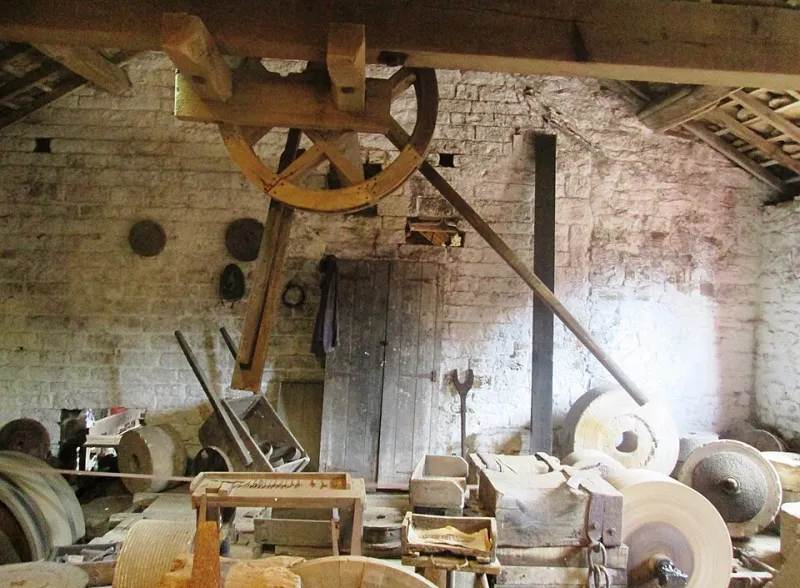
Photo: Margaret Anne Clarke, CC BY-SA 4.0, via Wikimedia Commons
A Sheffield knife is often sold with two stories. One is metallurgical: steel, heat treatment, geometry, edge. The other is increasingly environmental: recycled steel, low-impact workshop practice, recyclable packaging, a blade built to be repaired rather than replaced. The first story can be tested at the bench. The second is harder to see, which is why it attracts both genuine effort and loose language. For a UK buyer in 2026, the useful question is not whether a knife is 'green' — no manufactured object is — but whether the maker can produce a credible audit trail behind the claims it makes.
The Steel Is Only the First Entry
Most environmental discussion of cutlery begins with steel. That is understandable, but it can mislead. A Sheffield workshop may use British steel, European steel or a specialist grade from further afield; it may use recycled content, virgin stock, or a blend whose provenance is not fully known. Each choice carries different burdens, and the burden does not end when the bar arrives at the door.
A buyer should look for specificity rather than sentiment. 'Recycled steel' is a start, but it is not an audit. Which grade? Where was it melted? What proportion is recycled? Does the maker hold mill certificates or supplier declarations? A workshop that cannot answer every question may still be acting responsibly, but it should say what it knows and what it does not. The honest position is usually more modest than the marketing position, and more useful.
The Grindstone Has a Ledger Too
Grinding is the part of knife-making that leaves the least glamorous trace. Metal removal produces sludge: fine steel particles, abrasive grit and water. In a small Sheffield workshop, the whetstone or belt grinder may run for hours, and the sludge has to go somewhere. Responsible disposal matters. So does water use, particularly where cooling and dust suppression are involved.
This is not a reason to avoid Sheffield knives. It is a reason to ask better questions. Does the workshop separate grinding waste for recovery? Is sludge dewatered and consigned through a licensed route? Are water and energy use monitored, or merely estimated? A small maker may not publish a sustainability report, but a straightforward answer — 'we use a closed-loop filtration unit', 'our swarf goes to a licensed recycler', 'we do not yet measure water use' — is more trustworthy than an unsupported promise of carbon neutrality.
Packaging Is Visible, but Not Always Significant
Packaging is the environmental claim a buyer can see first. A Sheffield knife may arrive in a card sleeve, a moulded pulp box, a plastic-lined wallet or a wooden presentation case. The differences matter, but they are often smaller than the differences in how long the knife is used and how well it is maintained.
That does not excuse waste. A workshop should be able to explain why it uses the packaging it does. Is the box necessary for postal protection, or is it there to satisfy retail display? Can the buyer recycle it locally? Are inks and adhesives compatible with kerbside collection? In 2026, 'fully recyclable' is a claim that should come with a practical instruction, not just a symbol. The same applies to any 'plastic-free' statement: paper tape and compostable liners are welcome, but only if they survive the journey and can be disposed of as claimed.
Repair and Longevity Are the Strongest Claims
The most defensible environmental argument for a Sheffield kitchen knife is not in its packaging. It is in its potential to remain in use. A knife that can be sharpened, rehandled and repaired has a lower lifetime burden than a cheaper blade that is discarded when the edge fails or the handle loosens. This is where small workshops have a genuine advantage, provided they support the claim with service.
Buyers should ask whether the maker offers sharpening, handle replacement or bolster repair. Is there a published route for return? Are spare parts available? Does the workshop keep records of the steels and fixings it used? A repair-led approach is not a marketing device; it is an operational commitment. It requires bench time, storage and administration. When a maker offers it, that is evidence of a longer-term environmental view, even if the word 'sustainable' never appears on the website.
What a UK Buyer Can Reasonably Ask
The practical test is an audit trail, not a badge. Before buying, a UK customer might ask five questions. First, what steel is used, and what documentation supports its provenance? Second, how is grinding waste handled? Third, what packaging is used and how should it be recycled? Fourth, what repair and sharpening services are available after purchase? Fifth, are there any environmental claims that cannot be substantiated?
A good maker will not necessarily answer all five perfectly. Small workshops face real constraints: time, cost, record-keeping, the sheer difficulty of measuring a craft process. But a good maker will distinguish between what is known, what is estimated and what is aspirational. That distinction is the difference between an honest green ledger and greenwash.
Sheffield's cutlery trade has always been a trade in evidence: the mark on the tang, the test on the bench, the edge on the board. Environmental claims deserve the same discipline. The buyer who asks for the audit trail is not being cynical. They are treating the maker as a professional — and asking the workshop to put its green claims where its grinding wheel is.